Playing by Ear Is a Gift — Here’s What to Add to It
Some of the most musical people in any room never learned to read a note. They sat down at an instrument, listened, and figured it out. They developed an instinct for melody, harmony, and feel that formal training doesn’t automatically produce — and sometimes never produces at all.
If that’s you, don’t let anyone convince you that playing by ear is a lesser skill. It isn’t. It’s a genuine gift, and it took real time and real musicianship to develop.
But there’s one thing it can’t give you on its own.
What a Worship Musician Playing by Ear Does Well
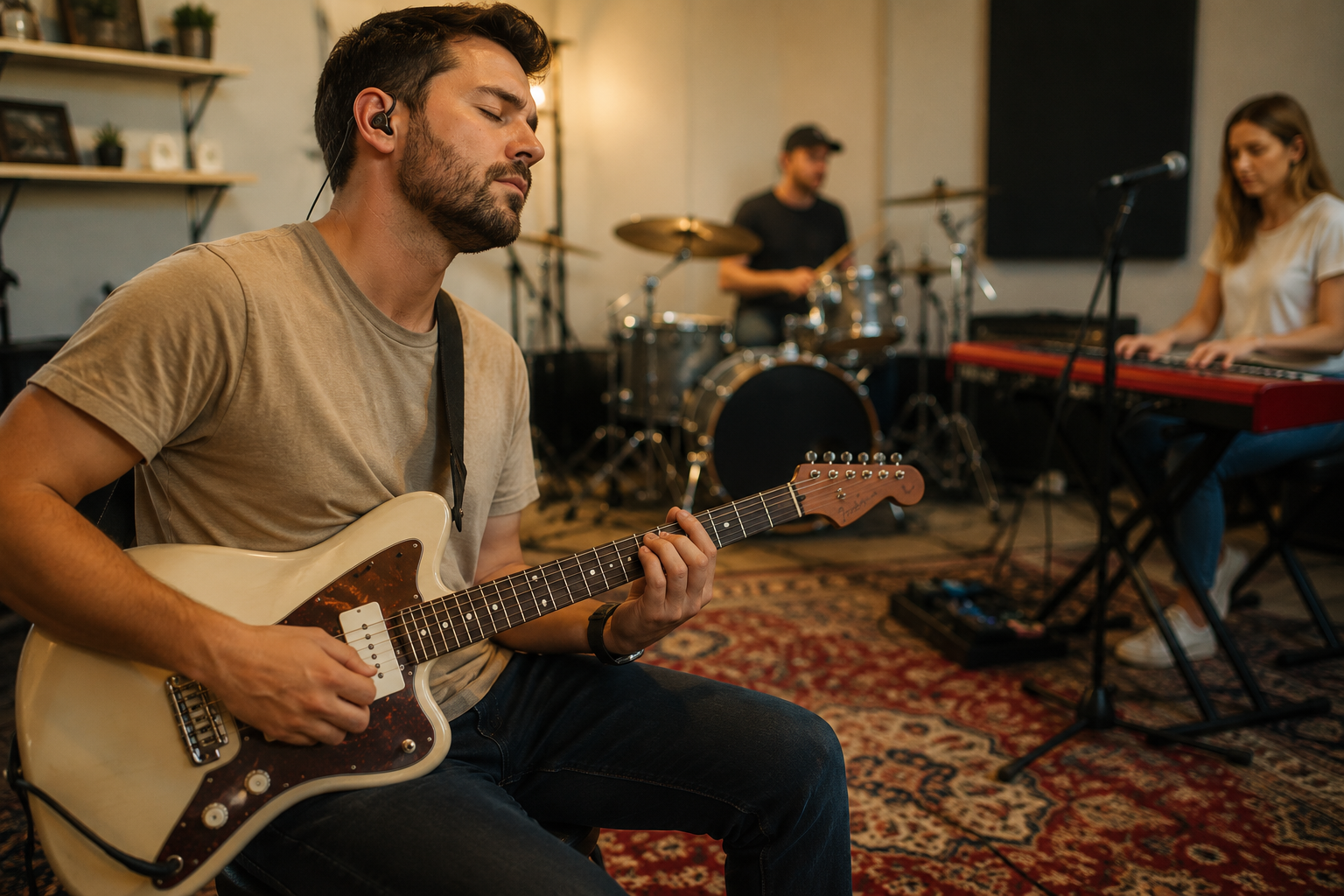
Musicians who play by ear tend to have something that’s difficult to teach: they hear music. Not just the notes, but the feel — the way a chord wants to resolve, the space between the beats, the emotional weight of a phrase.
They pick up new songs quickly. They’re sensitive to what’s happening around them in a band. They respond naturally to the moment rather than being locked to a page.
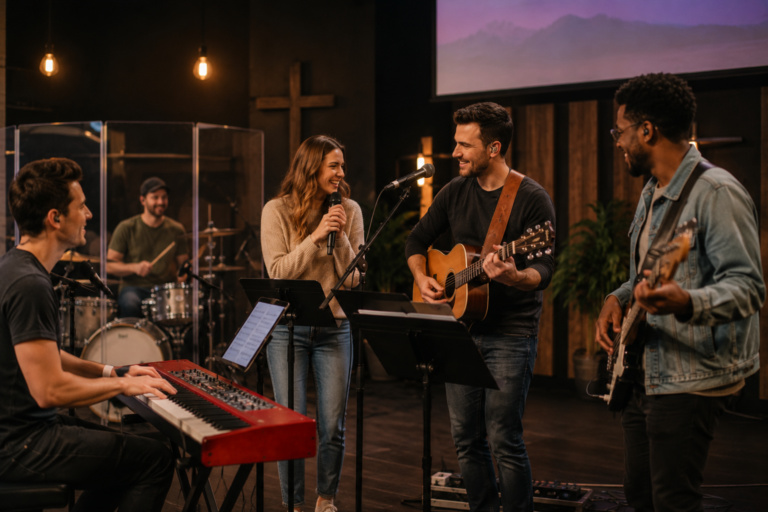
These are real strengths. In worship music especially, where the moment matters and rigidity can kill a room, musical sensitivity is invaluable. The best worship musicians in the world — and some of the best musicians across every genre — learned entirely by ear.
Where Playing By Ear Has Limits
Here’s the honest part.
Playing by ear works best when you know the song. When you’ve heard it enough times that the changes are in your muscle memory, when the feel is locked in, when there’s nothing left to figure out.
But worship teams introduce new songs regularly. Not every musician on your team has heard every song the same number of times. Not everyone has the same version in their head. And even when they do, “I think the chord changes somewhere around here” is a different thing from “the chord changes on beat three of measure two.”
That gap — between what you hear in your head and what the whole band plays together — is where things fall apart in rehearsal. It’s why you play a song five times before it feels right. It’s why the bass player and the guitarist keep landing in different places on that one transition. It’s why your worship leader stops the band and says, “Let’s lock in that change.”
Your ear is telling you how to play. It can’t tell everyone else when.
What Chart Reading Adds
Learning to read a rhythm chart doesn’t mean abandoning your ear. It means giving your ear a partner.
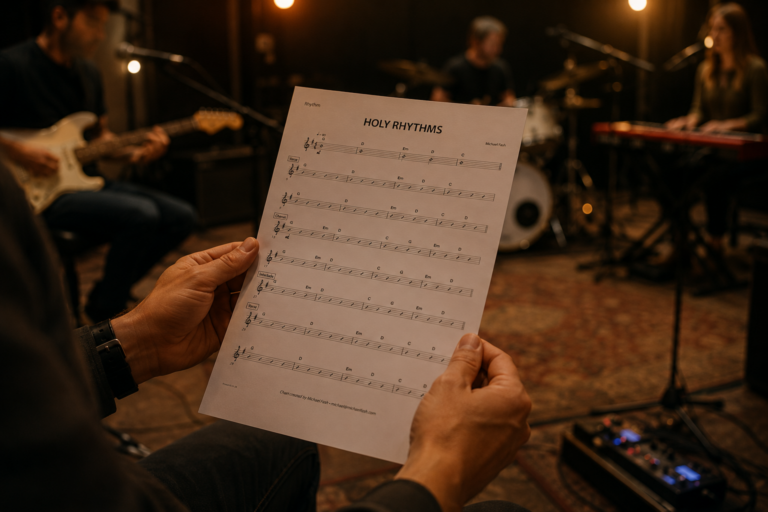
Your ear handles feel, groove, dynamics, sensitivity — all the things that make music musical. A rhythm chart handles precision — exactly when the chord changes, exactly where the rhythmic figures land, exactly how the song is structured from intro to tag.
Together, they cover everything. Separately, each one has a blind spot.
For a worship musician who plays by ear, adding rhythm chart literacy is the most practical skill upgrade available. It doesn’t require starting over. It doesn’t require unlearning anything. It builds directly on what you already do well.
The musicians every worship leader most wants on their team are the ones who bring both — musical intuition and the ability to lock in precisely with everyone else. Those musicians make rehearsals shorter, Sunday mornings tighter, and the whole band better.
The Combination Is Powerful
Think about what you already bring. You hear music naturally. You feel the groove. You’re responsive and musical in the moment.
Now add this: you can pick up a rhythm chart for a song you’ve never heard, count yourself in, and play it with your band — together, precisely, first time through.
That’s a complete musician. That’s the worship musician who can serve any team, sub in any church, and show up prepared for any song list.
Your ear got you here. For every worship musician playing by ear who wants to go further, rhythm chart literacy is what takes you the rest of the way.”
The Reading Rhythm Charts course at WorshipBandTraining.com is built specifically for musicians like you — people who play by ear, who love worship, and who are ready to add the one skill that makes everything else click.